A school year tells you how old a student is. It does not tell you what they are ready to learn next.
Two children in the same Year 6 class can be years apart in maths. One child can read well above their year and still find written fractions hard. When tutoring follows the year label, one of them waits while the other is lost.
We start with a free assessment
Every student at Think Academy starts with a diagnostic. It shows what they already know and where the gaps are, in each subject separately.
Then we place them by level, per subject
The assessment sets a level for each subject. A Year 10 student can study Year 9 maths and Year 8 English. The level is where the teaching starts. It is not a grade and it is not a judgement.
Then we check that it is working
- Every day, the student does short, targeted exercises set to their level.
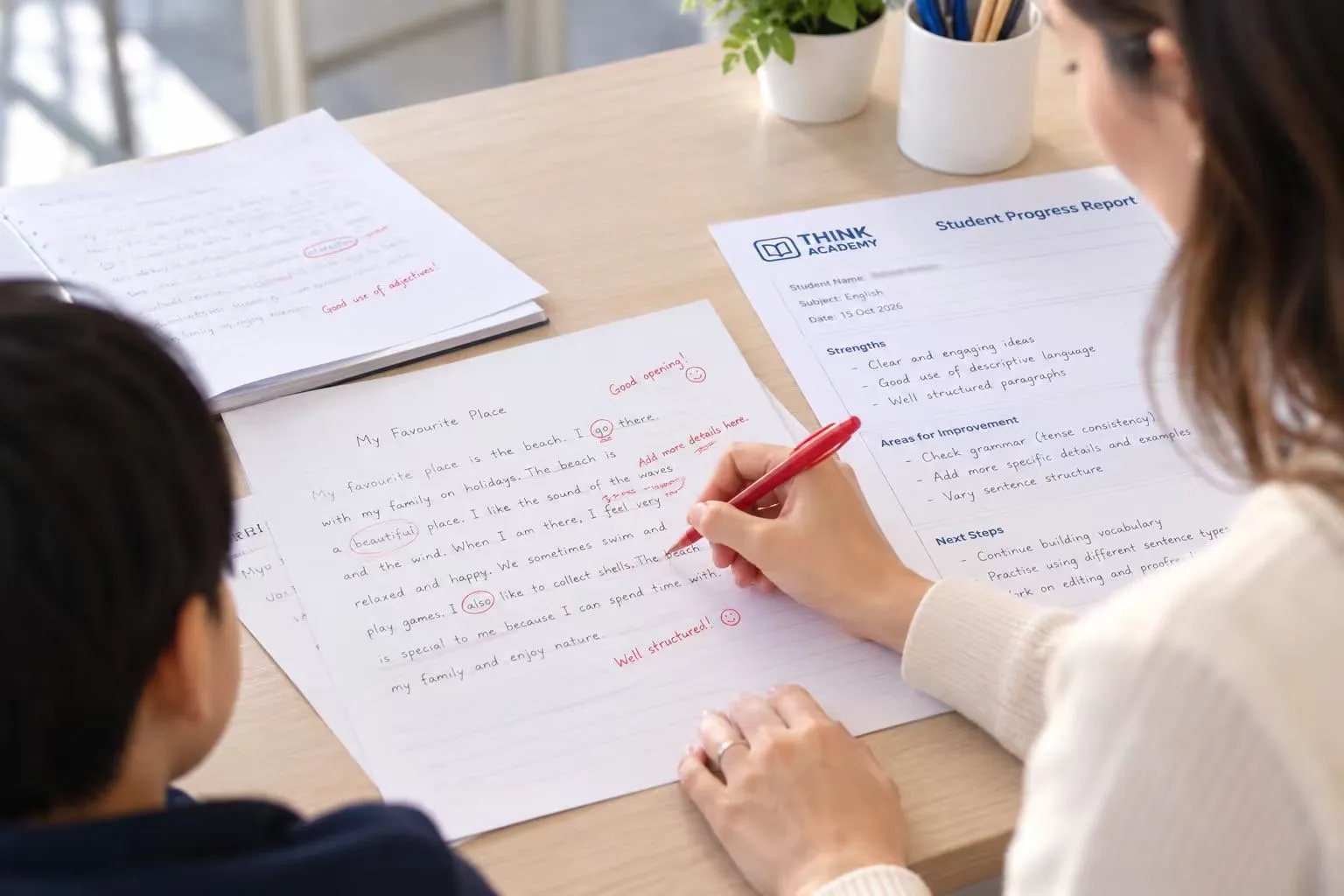
- Every week, parents get a progress report: strengths, gaps and what to focus on next, with attendance, time on task and accuracy.
- Every three weeks, a checkpoint test against a fixed standard confirms the progress. When a student meets the bar, they move up a level.
Because the standard is fixed, moving up means something. A student who moves up has shown they can do the work at the next level.
What this means for your child
A student who is behind fills the gaps first, without being rushed past them. A student who is ahead keeps moving, without waiting for the class. In both cases you can see the progress each week.
If you want to know where your child is today, book a free assessment.